Field recording  as a practice for social impact and civic engagement

An Erasmus+ cooperation project bringing together Kiosk Radio (Brussels), Refuge Worldwide (Berlin), Radio Dopo (Palermo), Biorhythm (Kyiv), and Field Records (Amsterdam) to explore field recording and deep listening as tools for artistic expression, adult learning, wellbeing and social awareness.



The project is designed for adult learners from diverse backgrounds – including artists, educators, social workers, migrants, journalists, and individuals affected by social or psychological precarity.
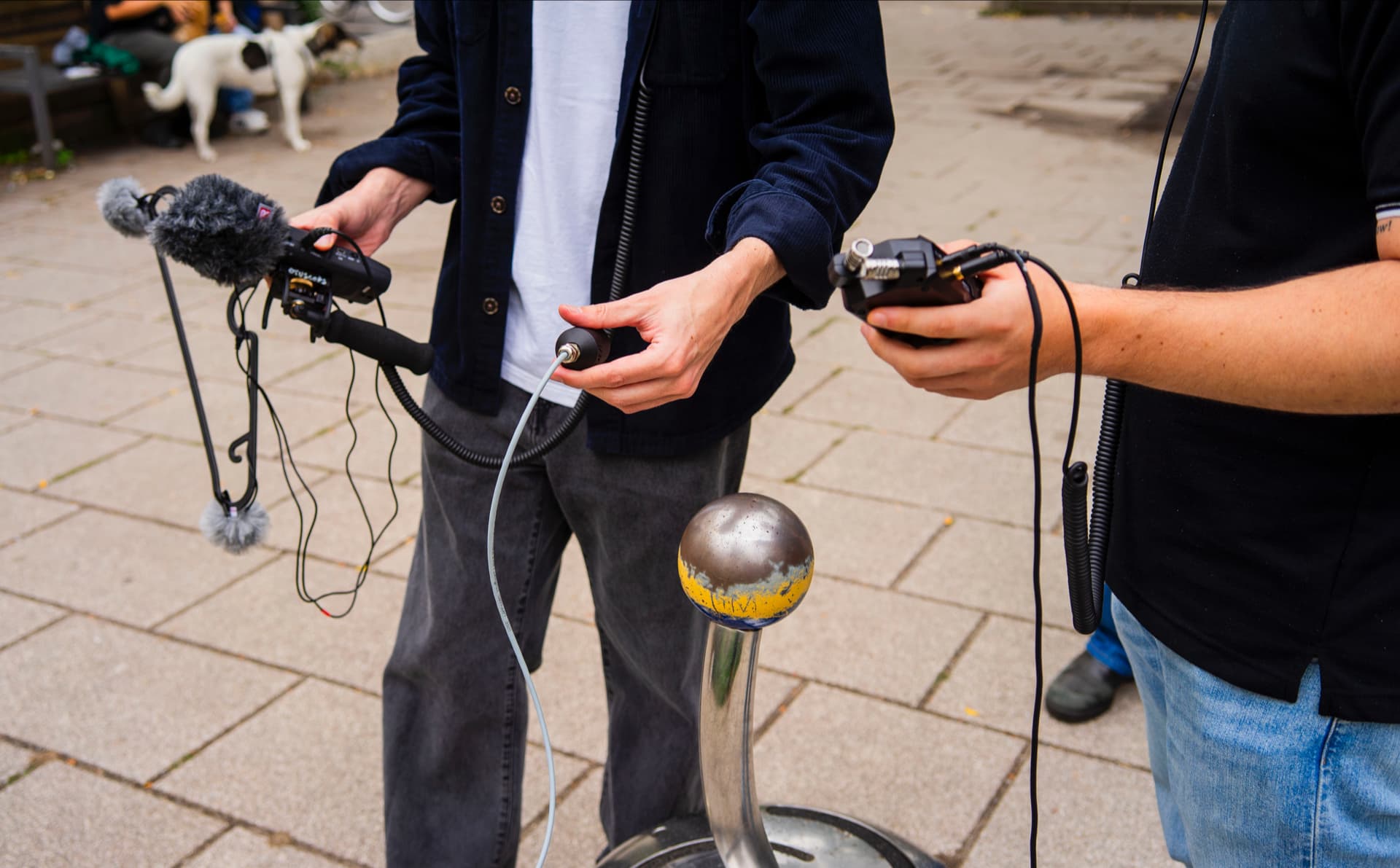
It positions field recording not only as an academic, artistic, musical or journalistic practice, but as a reflective and therapeutic methodology, capable of fostering attention, emotional regulation, and new ways of understanding place, memory, and marginalised experience.
Field recording – the practice of capturing sound outside controlled studio environments – has historically served as a means of documenting cultures, environments, and lived realities. From the ethnographic work of Frances Densmore and Alan Lomax, to the expansion of listening practices through Pierre Schaeffer, sound recording has shaped how societies listen to themselves. In recent years, within experimental music and art contexts, artists such as Emeka Ogboh, KMRU, and Vanessa Rossetto have expanded field recording into a practice concerned with migration, trauma, displacement and ecological change.
Sounds Afield builds on this lineage, framing deep listening and sound awareness as tools for personal reflection, collective care, and social insight.
The project explores attentive listening and field recording as tools in artistic, journalistic, musical and therapeutic contexts, offering new ways of understanding lived environments. By focusing on everyday and often overlooked soundscapes – shaped by labour, migration, social inequality, and under-represented communities – participants learn how sound can reveal hidden social realities. Because listening and recording do not depend on verbal expression, these practices function as inclusive, non-verbal learning tools that are especially suited to diverse adult education contexts – including therapy.